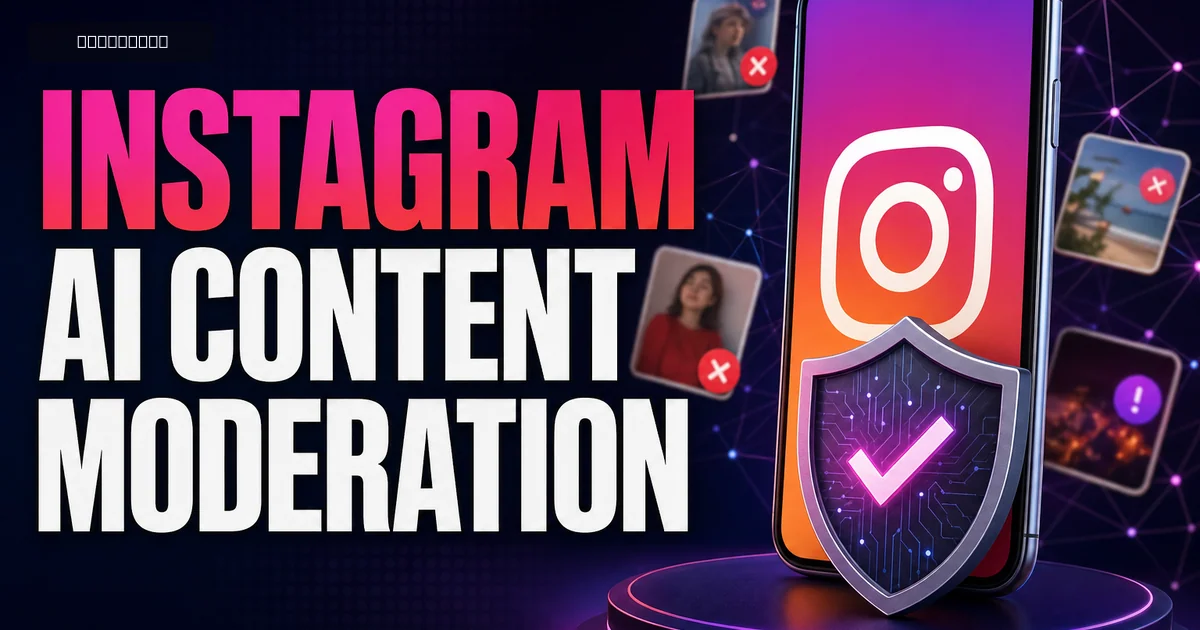
Instagram AI content moderation is the use of machine-learning systems to identify posts, captions, comments, or account behavior that may violate platform rules. It can process material faster than a human review team, but speed doesn’t guarantee an accurate reading of context.
No Meta announcement, release notes, Help Center document, or independent report was provided with this story to establish the details of a newly released update. BoostHill therefore can’t confirm a rollout date, affected countries, enforcement categories, or changes to Instagram’s appeals process.
Creators shouldn’t rebuild their content plans around an unsupported update claim. They should prepare for the broader trade-off automated moderation creates: quicker action against obvious abuse versus a greater need to document false positives and explain context during an appeal.
What does the Instagram AI content moderation update actually change?
No supplied source establishes what the reported Instagram AI content moderation update changes. Any claim that Instagram has introduced a new detection model, expanded scanning, or altered enforcement thresholds remains unverified without a dated Meta statement or visible product documentation.
That distinction matters. An enforcement spike experienced by several creators could result from a policy change, a technical error, coordinated reporting, or older systems applying existing rules. Those explanations produce similar symptoms. Posts disappear, reach drops, or accounts receive warnings, yet the cause may differ.
Creators should look for evidence inside Instagram before treating the issue as a confirmed platform-wide rollout. Save the exact violation notice, the policy category named in the notice, the posting time, and the appeal result. If Instagram provides no explanation, record that too.
My view is simple: screenshots from one account aren’t release notes. Creator reports can reveal a genuine problem, but they don’t prove that Instagram intentionally changed its moderation system.
Why could AI moderation help Instagram creators?
AI moderation can help Instagram creators by screening large volumes of abusive or clearly prohibited material faster than manual review alone. That potential benefit matters most in comments, direct interactions, and coordinated harassment, where harmful activity can arrive faster than a creator can remove it.
A system that correctly recognizes repeated spam phrases or identical scam messages could reduce the cleanup burden under a viral Reel. Earlier intervention may also stop impersonation attempts from reaching more followers. These are potential outcomes, however, rather than confirmed features of the reported update.
Scale is the strongest case for automation. A human reviewer can examine context carefully but can’t inspect every new comment as it appears. Software can make an initial classification and send uncertain cases for further review.
The caveat sits in that word: correctly. Faster enforcement helps creators only when the system identifies the right material and leaves legitimate expression alone.
Where can automated Instagram enforcement go wrong?
Automated Instagram enforcement can misread context that depends on satire, education, news reporting, identity, or the relationship between people in a conversation. A model may recognize a sensitive word or image without understanding why the creator used it.
Consider a fitness educator debunking a dangerous supplement claim. The educator may repeat the claim on screen so viewers recognize it. A moderation system could focus on the phrase while missing the correction that follows. Similar problems can affect documentary footage, artistic nudity, historical images, and creators discussing harassment they received.
False positives carry a practical cost even when Instagram later restores the post. A time-sensitive collaboration may miss its scheduled window. A removed announcement could lose early comments and shares. The creator also spends time collecting evidence and contacting a brand instead of publishing.
Creators face another trade-off: changing every caption to satisfy a guessed-at filter can make useful content vague. Excessive self-censorship isn’t a smart long-term response to an update that hasn’t been documented.
AI moderation vs human review: which is better for creators?
AI moderation is better for rapid first-pass screening, while human review is better for disputes that depend on intent and context. Instagram creators need both functions because neither approach works well on its own.
Automation can compare huge numbers of uploads and detect recurring patterns. Human reviewers can interpret a quotation, assess a newsworthy image, or distinguish targeted abuse from friends joking with each other. Manual review is slower and may still be inconsistent.
The best creator-facing process would explain the rule involved, show which part of the content triggered enforcement, and provide a meaningful appeal route. No source supplied for this story confirms that Instagram has added those protections.
Creators should judge any moderation update by its outcomes rather than its AI label. Fewer abusive comments would be useful. Unexplained removals with no workable appeal would be a step backward, regardless of how advanced the underlying model sounds.
What should Instagram creators do while details remain unconfirmed?
Instagram creators should preserve evidence, check official notices, and avoid drastic account changes until Meta documents the reported update. Deleting old posts in bulk or rewriting an entire content calendar could destroy useful evidence without fixing the underlying issue.
Start an incident log if Instagram removes content or limits an account feature. Record each case separately. Patterns become easier to identify when you can compare policy labels, formats, topics, and appeal outcomes instead of relying on memory.
Don’t repost the same removed material repeatedly while an appeal is open. That tactic may create more enforcement events and make the account history harder to assess. Keep the original file and prepare a short explanation of its purpose.
Creators working with sponsors should also add moderation delays to campaign agreements. A simple clause covering platform removal can clarify whether a replacement post, revised creative, or alternate publication date is required.
Genuine audience activity remains the safer growth foundation. Bots and fake comments can introduce repetitive, suspicious behavior while contributing nothing to audience trust. BoostHill supports engagement from real, active accounts because authentic responses give creators information they can actually use.
If you want to grow faster, you can instagram followers from a real, active-account service and build momentum while you keep posting. For a deeper dive, read our guide on Meta Will Pay Instagram, TikTok & YouTube Creators to Post on Facebook.
For a deeper dive, read our guide on The Best Time to Post on Instagram in 2026 (And How to Find Yours).
For a deeper dive, read our guide on The Best Time to Post on Instagram in 2026 (And How to Find Yours).
For a deeper dive, read our guide on The Best Time to Post on Instagram in 2026 (And How to Find Yours).
For a deeper dive, read our guide on The Best Time to Post on Instagram in 2026 (And How to Find Yours).
For a deeper dive, read our guide on The Best Time to Post on Instagram in 2026 (And How to Find Yours).
For a deeper dive, read our guide on The Best Time to Post on Instagram in 2026 (And How to Find Yours).
For a deeper dive, read our guide on The Best Time to Post on Instagram in 2026 (And How to Find Yours).
For a deeper dive, read our guide on The Best Time to Post on Instagram in 2026 (And How to Find Yours).
For a deeper dive, read our guide on The Best Time to Post on Instagram in 2026 (And How to Find Yours).
For a deeper dive, read our guide on The Best Time to Post on Instagram in 2026 (And How to Find Yours).
- Capture the full enforcement notice, including the named policy.
- Save the original post, caption, audio details, and publication time.
- Submit one clear appeal and keep the confirmation.
- Check Meta’s official newsroom and Help Center for dated documentation.
- Tell affected brand partners before a campaign deadline passes.
Frequently asked questions
Read next: Instagram's 2026 Algorithm Reset: What It Means for Creators. For more, browse our News guides or all posts by Editorial Staff.