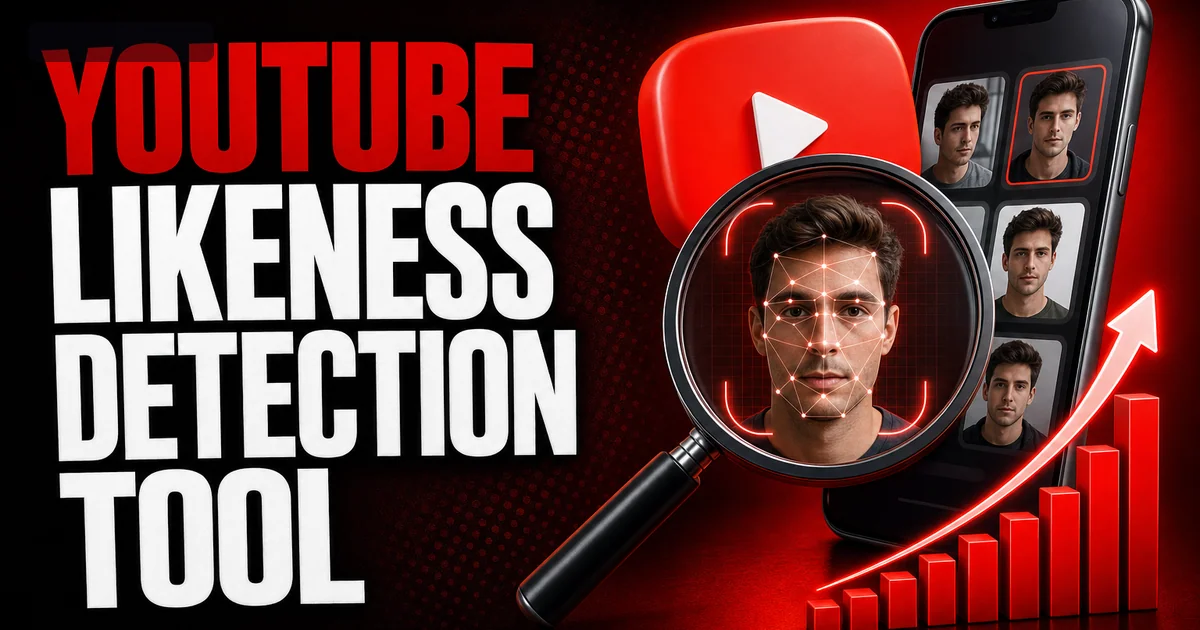
The YouTube likeness detection tool is rolling out as creators face a growing practical problem: AI-generated videos can reproduce a recognizable face without filming or hiring the person being copied.
The tool is designed to surface possible likeness matches so creators can review them and decide whether to request removal. A detection is a lead, though. It doesn’t prove impersonation, fraud, copyright infringement, or malicious intent.
Creators should treat the feature as an early-warning system rather than an automatic takedown button. The right response depends on what the video claims, how viewers could interpret it, and whether the copied likeness creates measurable harm.
What is the YouTube likeness detection tool?
The YouTube likeness detection tool is a creator-protection feature that identifies videos that may contain an AI-generated or altered version of a person’s face.
A likeness match is different from a Content ID copyright match. Content ID compares uploaded material with registered audio or video files. Likeness detection looks for a person’s recognizable appearance, which creates a harder judgment call because faces can appear in commentary, news coverage, parody, fan edits, or deceptive synthetic media.
YouTube’s rollout gives creators a place to inspect possible matches and consider a privacy-based removal request. Access may appear at different times across eligible accounts, so creators should check YouTube Studio rather than assume every channel receives the feature on the same day.
- Detection: The system surfaces a possible facial-likeness match.
- Review: The creator watches the video and checks its title, description, channel identity, and commercial claims.
- Decision: The creator can monitor the upload or pursue YouTube’s available reporting process.
Should creators request removal of every AI copycat?
Creators should request removal when an AI copycat could reasonably mislead viewers about identity, endorsement, conduct, or ownership.
A synthetic video that makes a finance creator promote a questionable investment deserves a fast response. So does an upload that places someone’s face in sexual material, fabricated confessions, political endorsements, fake giveaways, or advertisements the creator never approved. Those examples can damage trust before viewers reach the description or comments.
Removal is less obvious for clear parody, criticism, education, or reporting. A comedy sketch that labels an altered clip may still be irritating, but irritation alone isn’t the best standard for filing. Creators who report every unflattering use risk spending hours on material that viewers plainly understand as commentary.
My rule is simple: act on likely deception, material harm, or unwanted commercial use. Monitor obvious jokes and critical discussion unless the presentation crosses into harassment or dangerous fabrication.
How should creators review a likeness match before reporting it?
Creators should preserve evidence and inspect the full context before sending a removal request.
Watch the entire segment rather than judging the thumbnail. Record the video URL, channel handle, upload date, title, description, and relevant timestamps. Take screenshots because the uploader can change metadata or remove the video after receiving attention.
Then check how an ordinary viewer might read the upload. A disclosure buried in the description carries less weight than an on-screen label beside the synthetic footage.
- Confirm the person: Make sure the match shows you rather than someone with similar features.
- Check disclosure: Look for clear AI, parody, reenactment, or altered-media labeling.
- Identify harm: Document false claims, sales links, impersonation, harassment, or reputational damage.
- Save evidence: Keep screenshots, URLs, timestamps, and copies of related messages.
- Choose a response: Report serious misuse; monitor ambiguous commentary or parody.
Removal vs monitoring: which response works better?
Removal works better for active deception, while monitoring works better for ambiguous videos that have limited reach and clear context.
A removal request can stop further exposure if YouTube accepts it. The trade-off is that a disputed report takes time, and the uploader may repost an edited version elsewhere. Publicly attacking a tiny channel can also send curious viewers to content that previously had little traction.
Monitoring preserves your options. Save the evidence, watch for reposts, and check whether viewers are confusing the copycat with your real channel. Your YouTube handle, featured channels, consistent branding, and verified external profiles can help viewers find the genuine account.
Creators should avoid mass-reporting campaigns. Genuine reports from affected people carry more useful context than a wave of vague complaints from fans.
What does YouTube’s rollout change for creator growth?
YouTube’s rollout makes identity protection part of routine channel management rather than a problem creators address only after a deepfake spreads.
AI copycats can divert subscribers, sponsorship inquiries, and search traffic to an impersonator. The risk grows when a copied video uses the creator’s name, channel art, speaking style, or offer alongside the synthetic face. Clear channel branding and a memorable YouTube handle now serve a security purpose as well as a marketing one.
The tool won’t replace audience trust. Creators still need recognizable upload patterns, public warnings about scams, and real engagement from active accounts. Fake engagement creates more noise around impersonation; it doesn’t establish which account viewers should trust.
Creators who publish across YouTube, Rumble, Twitch, or Instagram should keep matching profile details and link their official accounts. Consistency gives viewers a quick way to verify where a clip came from.
If you want to grow faster, you can real youtube subscribers from a real, active-account service and build momentum while you keep posting. For a deeper dive, read our guide on Meta Will Pay Instagram, TikTok & YouTube Creators to Post on Facebook.
For a deeper dive, read our guide on YouTube Channel Ideas for Beginners: 2026 Edition.
Frequently asked questions
Read next: YouTube Now Pays Shorts by Watch-Through, Not Just Views (2026). For more, browse our News guides or all posts by Jessica Adler.