Rumble is a video platform where creators upload videos, go live, and build an audience, with its own model for discovery and monetization. It launched as an alternative to the largest video sites and has grown a reputation for news, commentary, and a lighter-touch approach to content moderation.
If you're new to it, this guide walks through the basics: how you publish, how people find your videos, how creators make money, and how Rumble differs from the platforms you may already know.
Uploading and publishing
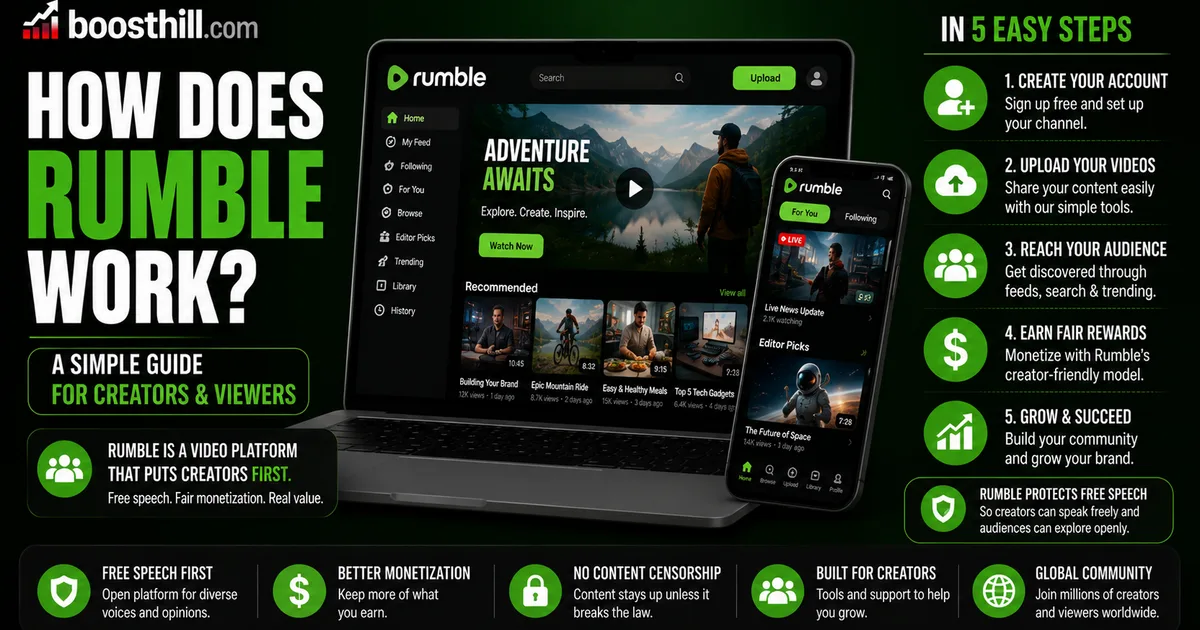
At its core, Rumble works much like other video platforms: you create a channel, upload videos, and publish them to your audience. You can add a title, description, and tags so your content is easier to find, and you can also stream live.
When you upload, Rumble may present licensing options that let your video be distributed to partners and other outlets. This is one of the features that sets Rumble apart, and it's optional, but it's worth understanding before you publish, since some licensing choices affect where else you can post the same video.
- Create a channel and upload videos or stream live
- Add titles, descriptions, and tags for discovery
- Optional licensing can distribute your video more widely
- Some licensing choices affect exclusivity elsewhere
How people find your videos
Rumble surfaces content through search, category browsing, a homepage feed, and recommendations. Viewers also reach videos through direct links shared on other platforms, which is a major traffic source for many creators.
Because Rumble's audience and recommendation engine are smaller than the biggest platforms, organic discovery is more modest. That makes the basics (clear titles, accurate tags, and sharing your links elsewhere) especially important for getting your videos in front of new people.
How creators make money
Rumble offers several monetization paths. There's advertising revenue tied to views, a subscription and tipping system that lets your audience support you directly, and the licensing model, where Rumble can place your video with partners in exchange for a share of the proceeds.
How much any of this pays depends on views, advertiser demand, your niche, and your audience. Any specific per-view or revenue-share figure you see online should be treated as approximate, because these numbers change over time. There are no guaranteed earnings on Rumble or any platform.
Monetization typically requires meeting Rumble's eligibility criteria and following its rules, so review the current requirements in your account rather than relying on numbers from older articles.
- Advertising revenue based on views
- Subscriptions and tips from your audience
- Licensing revenue when your video is distributed
- Earnings vary and are never guaranteed
Moderation and how Rumble positions itself
Rumble markets itself around free expression and a lighter content-moderation approach than the largest platforms. For some creators, particularly in news and commentary, that's a key reason to publish there.
It still has rules and terms of service, so 'lighter' does not mean 'anything goes.' If moderation policy is part of why you're considering Rumble, read its current guidelines directly rather than relying on its general reputation.
How it differs from the bigger platforms
The short version: Rumble is smaller, leans toward news and commentary, offers a licensing model the giants don't emphasize, and positions itself around lighter moderation. The largest platforms offer far more reach, deeper recommendation systems, and a bigger advertising market.
If you're building on Rumble, early credibility helps new viewers decide you're worth following. BoostHill can give that a head start with followers from real, active accounts, using only your public channel link. Best used alongside consistent uploads, since followers alone never guarantee views or payouts.
Frequently asked questions
Read next: How Many Views on Rumble Do You Need to Get Paid?. For more, browse our Rumble guides or all posts by Jessica Adler.