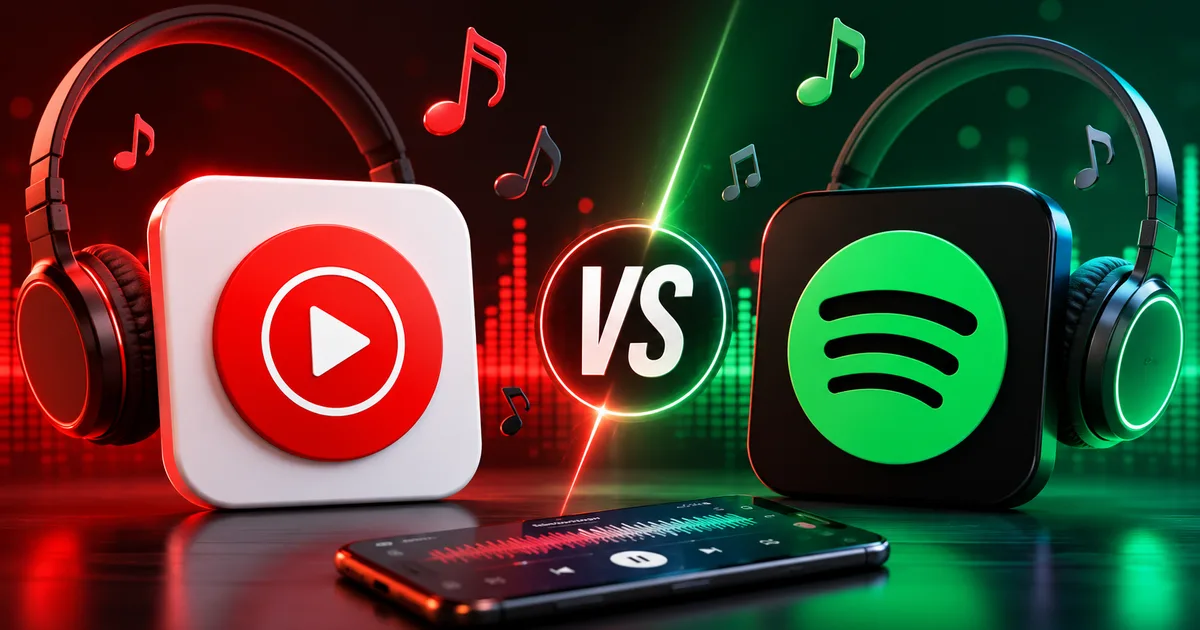
YouTube Music and Spotify are two of the biggest names in streaming, and choosing between them depends entirely on what you want. A listener who lives inside the YouTube ecosystem weighs different things than an independent artist deciding where to focus a release. Both services stream tens of millions of tracks, both have free and paid tiers, and both have loyal users, so the real differences are in the details.
This comparison looks at YouTube Music and Spotify from two angles: the everyday listener and the working artist. We will cover features, libraries, discovery, and how each handles the creator side, then close with an honest look at where streaming and social proof intersect for artists trying to grow.
Listener experience: features and library
For listeners, the two services feel different even though both offer huge catalogs, playlists, offline downloads, and personalized mixes. Spotify is built purely around audio and is known for a polished app, strong cross-device handoff, and a large universe of podcasts alongside music. Its free tier exists but comes with ads and some playback limits.
YouTube Music's signature advantage is its tie to YouTube itself. It can play official tracks, live versions, remixes, covers, and music videos that may not exist on audio-only services, and a paid plan often pairs with ad-free YouTube viewing. If you frequently chase a specific live performance or a song that only lives on YouTube, that breadth is hard to match. Exact features and plan details change over time, so confirm current specifics before deciding.
- Spotify: polished audio-first app, large podcast library, strong device handoff
- YouTube Music: access to videos, live versions, remixes, and covers
- Both offer playlists, offline downloads, and personalized mixes
- Both have ad-supported free tiers with some limitations
Discovery and recommendations
Discovery is where many listeners form a strong preference. Spotify has built much of its reputation on recommendations, with personalized playlists and a discovery engine that surfaces new tracks based on your habits. For people who want to be fed fresh music with little effort, that system is a major draw.
YouTube Music leans on YouTube's recommendation history and your viewing behavior, which can feel uncannily good if you already use YouTube heavily. The two simply pull from different signals: one from your listening, the other from your broader YouTube activity. Which feels better is genuinely personal, and trying both free tiers for a couple of weeks is the most reliable way to judge.
- Spotify: well-known personalized playlists and discovery features
- YouTube Music: recommendations shaped by your YouTube activity
- Different underlying signals lead to different suggestions
- Testing both for a few weeks beats relying on reputation alone
The artist side: distribution and tools
For artists, both platforms offer dashboards to manage your presence and see how listeners engage with your music. Spotify's artist tools are widely used and include analytics, profile customization, and playlist pitching, which many independent musicians treat as a central part of a release plan. You generally get your music onto Spotify through a distributor.
On the YouTube side, an artist's presence spans both YouTube Music and YouTube itself, which means music videos, Shorts, and the wider YouTube audience all factor in. That overlap can be powerful for artists who already create video content. The trade-off is that you are managing a presence across a larger surface, rather than a single audio-focused profile.
- Both provide artist dashboards and listener analytics
- Spotify is known for playlist pitching and profile tools
- YouTube ties your music to videos, Shorts, and the YouTube audience
- Most artists reach both via a distributor
Payouts and reach: setting expectations
Payouts are a common question, and the honest answer is that neither platform pays a fixed, predictable amount per stream. Streaming revenue depends on many factors, including listener location, subscription versus free plays, and each platform's own formulas, all of which can change over time. Comparisons of "per-stream rates" you see online are rough estimates, not guarantees, and should be treated with caution.
What both platforms reward is genuine, repeat engagement. Rather than chasing a single service for its rumored rate, most independent artists are better served by being on both and focusing on building an audience that actually listens, saves, and returns.
Where social proof fits for artists
On either platform, a new listener forms a quick impression from your profile, and follower or subscriber counts are part of that. An artist page that looks established can make a first-time listener more comfortable hitting follow and giving a track a real chance, which matters in a crowded field.
If you want to support that social proof on Spotify, BoostHill offers Spotify followers from real, active accounts using only your public profile link, with no password required and a refill guarantee. To be clear, this does not generate plays, playlist placement, or payouts, and BoostHill is independent and not affiliated with Spotify or YouTube. It is a credibility head-start that works alongside releasing music and building a genuine audience, never a replacement for it.
Frequently asked questions
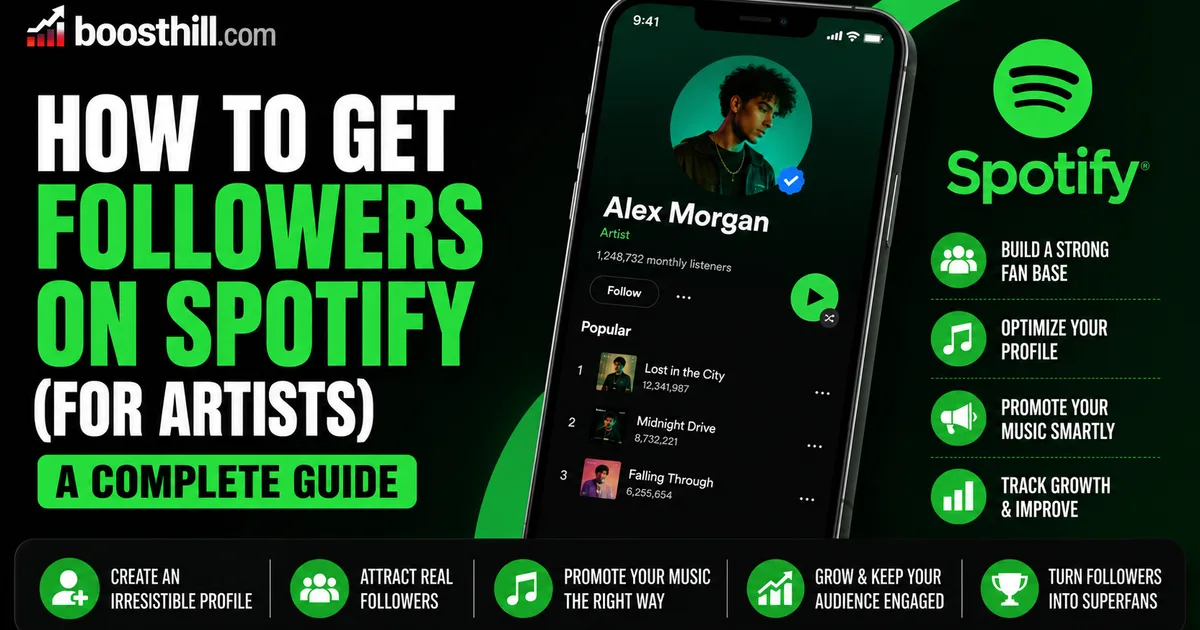
Read next: How to Get Followers on Spotify (For Artists) in 2026. For more, browse our Spotify guides or all posts by Eliza Rose.